Tree Trimming
Tree Trimming & Pruning in Compton and Greater Los Angeles
Pruning cuts made for the tree's long-term health, not just to make it smaller.
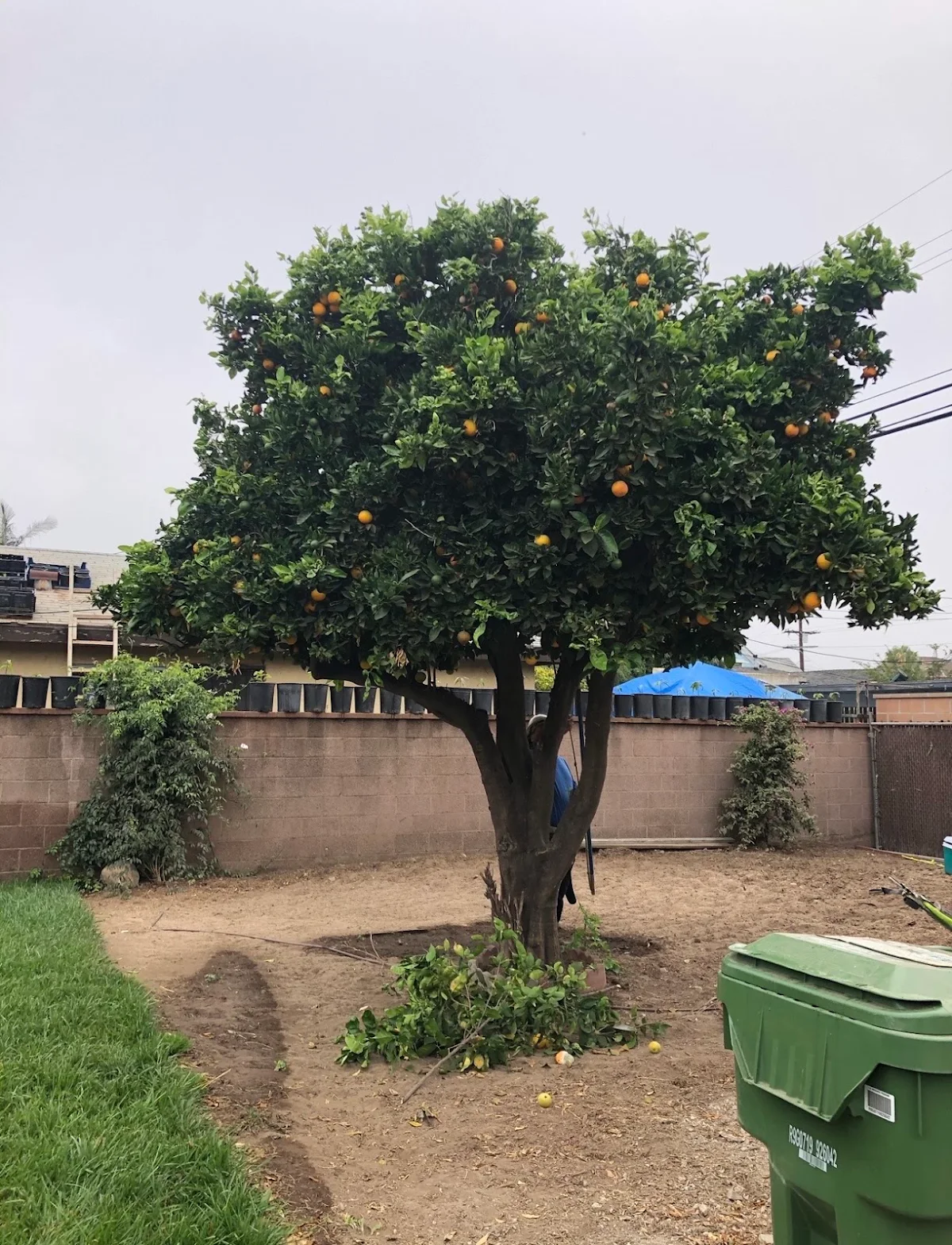
Tree trimming is the work we do most, and the way we think about it is simple. A cut is not just a way to make a tree smaller. Every cut changes how the tree grows for years after. Jose is a Certified Arborist with 17 years of hands-on tree experience, and before starting Someguyz Maintenance in 2018 he spent 8 years as a foreman for another tree company. The cuts we make are chosen for the long-term health of the tree, not just for how the yard looks the day we leave.
Answer all four questions for an honest read. This is general guidance, not a final call. We look at your tree in person before we tell you what it needs.
Crown thinning opens up a dense canopy so light and air move through it. A thinned canopy catches less wind, which matters on a hillside or anywhere Santa Ana winds blow. We remove crossing and rubbing branches and weak growth, and we keep the natural shape. We never take more than the tree can handle in one visit.
Crown raising lifts the lower branches up off the ground. This is the cut that gives you clearance over a roof, a driveway, a walkway, or a fence line. We raise the canopy without leaving the tree lopsided or overexposed.
Crown reduction shortens long, heavy limbs that have grown too far. This is not topping. Topping cuts a branch back to a stub and grows weak sprouts that snap in wind. Reduction cuts back to a strong side branch, which keeps the tree sturdy. We use it when a tree has outgrown its space but does not need to come down.
Deadwood removal takes out the dead and broken branches that can fall on a roof, a car, or a person. Dead limbs are the most common reason a tree feels dangerous, and taking them out is often all a tree needs. We also do structural pruning on young trees, which sets a strong frame of branches early.
Fruit tree pruning
Fruit trees need their own approach. Citrus, avocado, fig and stone fruit all fruit on different wood and at different times. We prune citrus in late winter or early spring after the coldest weather, with light shaping through the year. We avoid heavy cuts in the heat of summer because exposed citrus bark can sunburn. Fig and stone fruit are pruned after harvest, and we thin the canopy so light reaches the fruiting wood. The goal is a tree that fruits well and stays healthy.
Why topping hurts
Topping is the old way of chopping the top off a tree to make it shorter. It weakens the tree and grows a flush of weak, fast sprouts that break in wind and rot where they meet the stub. A topped tree is a dangerous tree within a few years. We never top. If a tree is too big for its spot, we talk about reduction or removal instead.
Common LA trees
The trees we see most each get out of hand in their own way. Ficus grows fast and heavy and lifts sidewalks. Jacaranda drops brittle branches after bloom. Chinese elm and sycamore grow big canopies that catch wind. Pine carries heavy limbs that fail in Santa Anas. Magnolia holds dense shade, and carrotwood drops messy seed pods. We know how each one grows and how to bring it back under control.
Birds and the law
In spring and summer, birds nest in dense trees, and active nests are protected by state and federal law. We start every warm-season prune with a nest check, and if we find an active nest we hold off on that part of the tree until the young have left.
Signs it is time
Branches on the roof, dead limbs in the canopy, a lopsided or heavy look, or too much shade killing the lawn below are all signs it is time. If you are not sure, send us a photo by text and we will tell you what we see before we come out. We give you a clear quote, and you decide what to do from there.
Routine Tree Maintenance
Routine tree maintenance is the steady care that keeps a tree from becoming a problem. It is the regular trimming that holds the shape and size of a canopy, the management of overgrowth before it crowds a roof or a walkway, and the removal of dead and damaged growth before a limb comes down on its own. A tree that gets this care on a steady rhythm stays healthy and sturdy, and it costs less to keep than a tree that is let go until it needs a big cut. We look at your trees and tell you what routine care each one needs.
Warning Signs Your Tree Needs Attention
Dead or dying branches. Branches with discolored or missing leaves during the growing season, brittle twigs that snap instead of bend, and limbs that are cracking or splitting are signs the wood is dead or dying. Dead branches are the ones most likely to fall, and they should come out before they do.
An overgrown, crowded canopy. When a canopy is so dense that light and air cannot move through it, the tree carries too much wind and too much weight. A crowded canopy drops heavy limbs in a blow and shades the yard below until it thins out. Thinning it opens it back up.
A new lean. A tree that has started to lean, or a lean that has gotten worse, can mean the roots are weak, the soil has eroded, or wind damage has shifted the tree. A new lean is worth a close look, because it can be the first sign a tree is losing its hold.
Cracks in the trunk or major limbs. Deep splits in the trunk or in the big limbs, bark that is peeling away, or mushrooms and fungus growing at the base are signs of decay or structural failure. A tree with these signs can look fine from a distance and still be unsafe up close. Call us and we will come look and tell you what we find.
Questions
Tree Trimming questions, answered.
Keep Going
Related services.
Service Area
Where we do this work.
Based in Compton, we serve homeowners across 23 Los Angeles County cities.
Trees too big for the yard? We've got the ropes and the know-how.
Get Your Estimate
Get Your Tree Estimate
Tell us about your trees. Photos help.
Need us sooner? Call (626) 412-9458.
See The Work
Anatomy of a Trim
Tap a number on the After photo to see what changed, and toggle to compare.
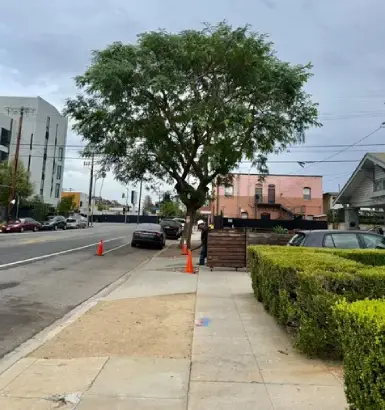
- 1Canopy thinned so light and wind pass through
- 2Low limbs raised for clearance over the sidewalk
- 3Shape kept balanced and natural
- 4Work area cleaned up
What's in Your Yard
Know your trees
Ten common LA trees, when to prune, and what goes wrong. See the full guide for all of them.
Mexican fan palm
- Best time to prune
- Any time of year, about once a year.
- What goes wrong
- Dead fronds build a thick skirt that hides rats and burns easily.
- How often
- About once a year. Keep green fronds above horizontal.
Canary Island date palm
- Best time to prune
- Any time of year, about once a year.
- What goes wrong
- Seed pods and fruit stalks drop on cars, pools and patios.
- How often
- About once a year. Keep the crown full and balanced.
Queen palm
- Best time to prune
- Any time of year, about once a year.
- What goes wrong
- Dead and hanging fronds drop, and the skirt hides pests.
- How often
- About once a year. Keep green fronds above horizontal.
Citrus
- Best time to prune
- Late winter or early spring, after the coldest weather.
- What goes wrong
- Heavy cuts in summer heat can sunburn exposed bark.
- How often
- Light pruning after harvest, with light shaping through the year.